

Every incident on video. Every claim settled in hours.
Dakawou Transport LTD runs 180 long-haul trucks between Mombasa, Nairobi and Kampala. In its first quarter on IntelliFleet 360, the fleet rolled out AI cameras with full driver and client consent, captured every incident on video, cut harsh-driving events by 44% — and turned claim disputes that dragged for weeks into four-hour evidence packs.
One quarter. Four numbers that changed.
When something went wrong, it was one driver's word against the world
Dakawou's trucks carry client cargo across three borders — and when an incident happened, nobody could prove anything. Claims dragged for weeks, clients rang the office for updates several times a day, and the legacy tracker offered a dot on a map with no video, no alerts and no history through the corridor dead zones.
- Unprovable incidents — without footage, every collision became a weeks-long argument between drivers, clients and insurers.
- Clients demanding visibility — cargo owners wanted to see their consignments in transit, and phone-call updates no longer satisfied anyone.
- Camera rollout worries — drivers and clients both had questions about in-cab cameras, and Dakawou needed the rollout done properly: briefed, consented and documented.
A consent-led camera rollout, live views for clients, video on every incident
IntelliFleet 360 fitted AI dash cams and telematics across all 180 trucks in under four weeks. Every driver was briefed, every client informed, and consent documented before a single camera went live — then the incident feed started doing the arguing for everyone.
- Video Alerts & Incidents — harsh events auto-captured with the clip attached: timestamped, geotagged, pinned to truck and driver.
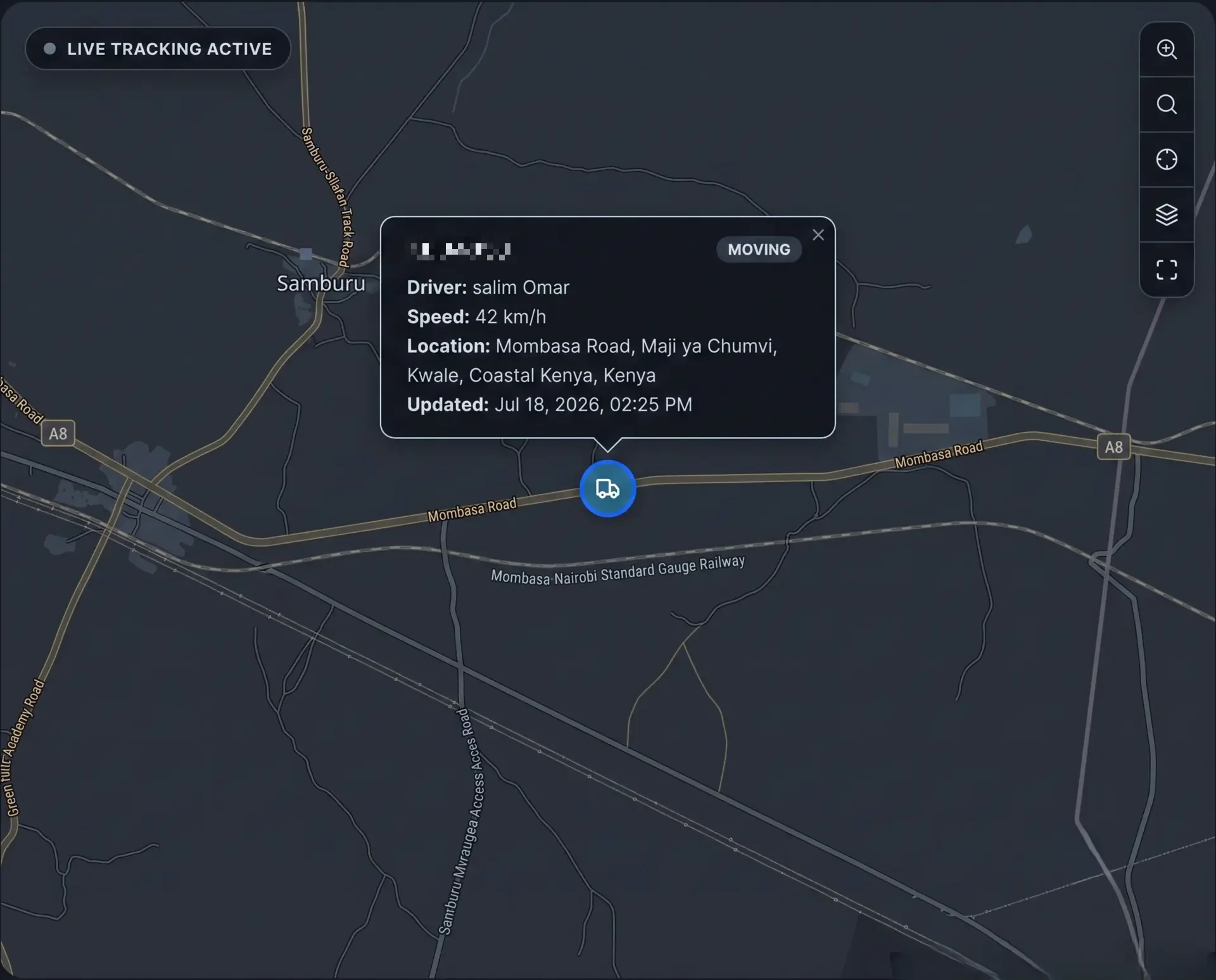
- Client live view — cargo owners open a live stream and map of their own consignment instead of calling the office.
- AI dash cams & driver scoring — in-cab coaching on harsh braking, tailgating and fatigue, with fair per-driver league tables.
- Routes history & store-and-forward — gap-free trip replay through the corridor dead zones, for internal tracking and audits.
"We did the camera rollout properly — drivers briefed, clients informed, consent on file. Now when something happens on the road, the clip is already attached to the incident before anyone has picked up a phone. Claims that used to take two weeks of arguing are settled in an afternoon, and our clients watch their own cargo on the live view. Nobody here wants to go back."
What changed on the ground
The rollout came first — and Dakawou insisted it be done properly. Over four weeks, every driver sat through a briefing on what the cameras record and why, every client was informed that their consignments would be camera-monitored in transit, and consent was documented before installation. That groundwork paid off immediately: instead of resistance, drivers started asking to see their own footage, and clients treated the cameras as a service upgrade rather than surveillance.
The operational change showed up in the incident feed. Every harsh brake, collision and near-miss now arrives with the road-facing and cab-facing clip attached — timestamped, geotagged, pinned to the truck and the driver. In the first quarter, 100% of reportable incidents were captured on video. A claim on the Kampala leg that would previously have taken two weeks of statements and counter-statements was closed with a four-hour evidence pack: the clip, the routes-history replay and the speed trace.
Client behaviour changed too. Cargo owners who used to ring the office for updates now open their own live view — the map and, where agreed, the camera stream for their consignment. Inbound "where is my cargo?" calls fell away within the first month, and two of Dakawou's largest clients cited the live visibility when renewing their contracts.
Internally, the same footage powers coaching. Per-driver scores built from harsh events, speeding and fatigue alerts cut harsh-driving events by 44% over the quarter, with the league table turning safety into a competition the best drivers want to win. Between faster claims, retained clients and fewer harsh events, the platform covered its cost within a single quarter — and Dakawou is now extending video telematics to its subcontracted fleet.
Run the same play on your fleet
Book a 20-minute demo. We'll set up a live view of a sample of your vehicles so you can judge the results on your own roads — Northern Corridor or otherwise.